Your future cat doesn’t need perfection it needs patience, kindness and consistency. They need time to settle, space to explore at their own pace and a calm environment where nothing is forced. They need routine and a home that feels predictable and secure. Most of all they need understanding. They need someone who won’t rush them and won’t give up when things feel slow.
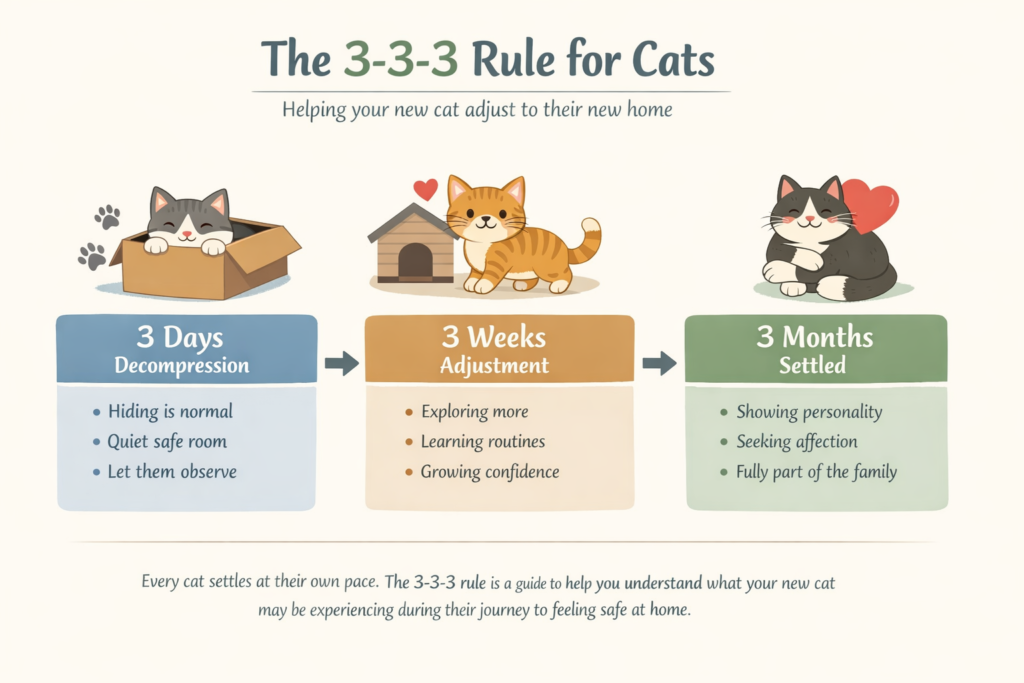
The Rule of Three
- 3 Days to decompress
- 3 Weeks to learn your routine
- 3 Months to feel safe, secure and settled in their new home
The rule of 3 is a typical adjustment period for your new cat. The timeline is not set in stone, but it will help you understand the stages of adjustment your cat is going through and how cats process new spaces, smells and people.
Patience and understanding is the key.
Three Days to Decompress
When a cat moves into a new home their whole world changes overnight and although you know your cat is safe and in their forever home – they do not. Decompression time is the quiet period a cat needs to process change and understand they are still safe.
When you welcome a cat into your home it is an exciting time for you but from their perspective everything they have known up until that point has changed. Your cat has lost his feline family, his people and his familiar environment. It’s not relief he feels it’s just one more confusing change in his life and he doesn’t know what to expect. New smells, new people, new sounds and new routines overwhelm them.
During this time a cat might hide, eat less, explore only at night or watch you from a distance. This doesn’t mean something is wrong it means your cat is learning. Many cats will spend the first few days hiding only exploring at night when the house is quiet.
Decompression isn’t rushing a cat to “settle” it’s giving them time to feel safe enough to be themselves. For some cats this might be mere days for others it might take longer.
A Safe Room
We require our adopters to set up a quiet safe room where their new cat can decompress. Cats do not like closed doors. Instead, we recommend that you use a cat net at the door, this way your cat does not feel trapped, and they can hear and smell the daily life of the house, other pets can go say hello safely.
Your cat’s safe room should contain cat beds, litter box, feeding station, scratch post, vertical perches and escape routes, be softly lit and have plenty of boxes for hiding places. Choice points like these empower your cat and speed up decompression.
During the decompression period keep the room quiet. Sit on the floor, quietly read aloud, sing or talk to your cat so they get used to your voice and realise you aren’t a threat. Offer treats but don’t force interaction, let the cat come to you when it wants to as this builds trust at a pace your cat chooses.
Create simple daily rhythms which means feeding at the same time and doing things in the room such as emptying litter trays in a certain order and don’t move anything around. Keeping routines consistent, calm and predictable is crucial in the early stages.
Body Language
You might notice in the very first days of adoption that your cat has dilated pupils (wide eyes), their ears might be back or flat, their tail tucked in and they might even hiss or growl if you get too close. This is all to be expected.
Respect the Hiss!
A hiss is not an attack it is a warning. It’s a survival tactic that their mothers teach them. Cats hiss when they feel cornered or are unsure of a situation. It’s not aggression, they are just telling you they feel overwhelmed. It is the only way a 5kg cat can say to you I’m feeling threatened please back up. Respect the hiss, it’s a boundary not a bite.
The best response to a hissing cat is to give them space and allow them time to calm down. Move slowly, speak gently, and let them approach you when they feel ready. Understand that hissing comes from fear not bad behaviour. So, respond with kindness. Give them space and you’ll see them relax.
Three Weeks to Adjust
In this phase you’ll notice your cat start to show more curiosity. They might peek out more and sniff everything. Structure and security remain vital so keep those predictable routines as they will reduce your cats fear.
You might see small signs of progress at first. Cats will often only begin to explore when the house is quiet usually at night. They gradually build confidence and lay down their scent by rubbing on furniture and furnishings.
As they feel more confident, you’ll notice small changes like eating comfortably in front of you, coming out earlier each day or not running away when you come closer. They’ll begin to show you their personality and start to sit with you and accept strokes and cuddles.
Adopters often ask when is the right time is to take the netting down so the cat can explore the rest of the house? The answer is the cat will tell you when they are ready as you will notice them following you out or sitting at the net door showing an interest in what is beyond. At this stage open the net door and let them explore at their own pace, ensuring they can return to their safe room when they need to. You’ll often find that this initial exploration only takes place at night when you’re asleep.
Remember the first weeks aren’t about instant cuddles they are about laying down the groundwork to build trust and the space and reassurance they need to feel at home.
Three Months to Settle
Over the next 3 months most cats relax fully, show affection and join daily life. Their true personality is on full display! Trust grows with consistent care, gentle handling and play. You’ll see a more relaxed posture from your cat, slow blinks, seeking attention, head bumps, normal eating, grooming and generally normal cat behaviour.
There might be setbacks. Remember that most rescue cats have ghosts from their past. If you move too quickly, raise your voice, they hear a sudden unexpected sound from the television or maybe a pan dropping they might bolt and go back into hiding. This is normal. Don’t take it personally. You didn’t cause that fear but you’re the one that must heal it and patience is the only medicine. Prove to them over and again that they are safe now.